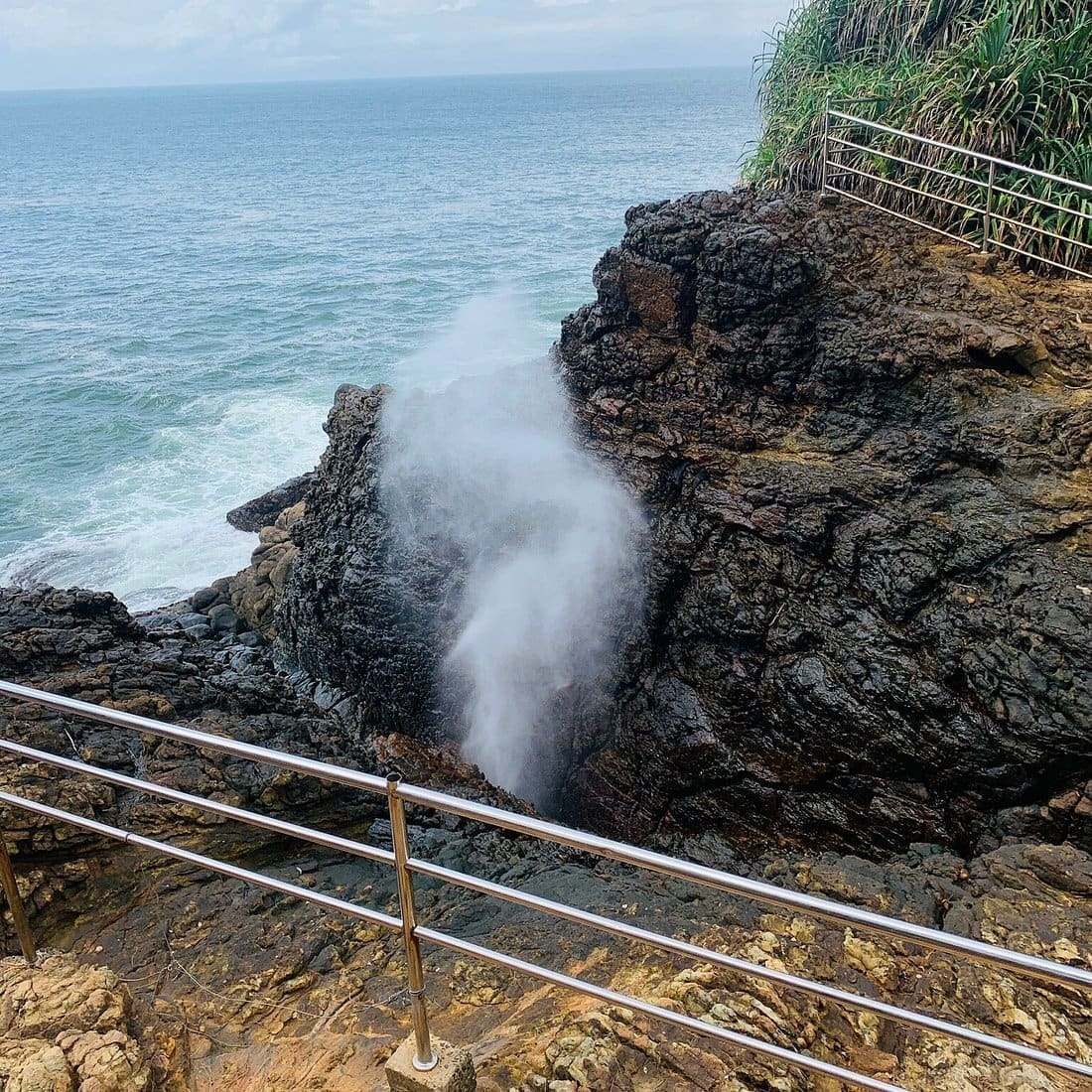
Hummanaya Blowhole – Kudawella
Complete travel guide · distances from Hiriketiya, things to do, and how to get there.
Overview
Hummanaya Blowhole Sri Lanka — at Kudawella — is the country’s only natural blowhole and is widely cited as the second-largest blowhole in the world: a bucket-list stop for things to do near Tangalle and Dikwella, slow-travel coast days, and that viral 25–30 m water spray.
Search “Hummanaya Blowhole Sri Lanka,” “Kudawella blowhole,” or “things to do in Tangalle” and you land on the same fishing-village story: an off-the-beaten-path Southern Province attraction between Matara (about 28 km), Dikwella (~5 km), and Tangalle (~12 km). The headline that travellers share is the “second largest in the world” claim — treat it as folklore-plus-geology: under big swell, jets can approach roughly 25–30 m (80–100 ft), but physics is honest — if the sea is flat, you may get mist or nothing; that transparency builds trust. Geologically, waves compress into a submerged cavern and force a chimney vent; the Sinhala name nods to the distant “hoo” sound. Social and blog trends focus on three beats: (1) the spray shot for photographers and reels, (2) Sri Lankan street food along the approach — fried fish, prawns, and snacks from Kudawella vendors — and (3) stacking the visit with nearby Nilwella’s Blue Beach Island sandbar (tombolo) for a quieter alternative to busy Mirissa — see our Blue Beach Island guide. The site offers a viewing platform and a small marine-life information centre; eruptions are intermittent — budget patience. After parking, expect a short trek (often quoted ~10–15 minutes, sometimes steep stairs, roughly a few hundred metres depending on where you leave the vehicle) past vendors; paid informal parking is common — agree LKR first. Early 2026 field reports often cite about 500 LKR for foreign visitors and about 50 LKR for locals, but boards change — always read the ticket counter the same day. Our Book & verify strip links Tripadvisor, Reveal, Wikipedia, research PDF, and Kate & Mike’s notes for cross-checking.
Key features & experience
Ocean hydraulics in plain view: a cave under the cliff narrows into a chimney; when a wave packs the cavern, water exits vertically.
- 1
World-class talking point: Sri Lanka’s only known blowhole — frequently described as the second-largest blowhole by spray height (compare sources; seas must cooperate).
- 2
Natural phenomenon: submerged cavern + chimney — not a fountain.
- 3
Sound: “Hummanaya” echoes the “hoo” when the plume fires.
- 4
Facilities: fenced deck, small museum / marine-life info — stay behind barriers; mist soaks lenses and clothing.
Trending topics — photography, Kudawella food & hidden beaches
Authentic, slow-travel searches cluster around natural wonders of Sri Lanka plus village life — lean into that narrative.
- 1
Photography & “the shot”: shooters line the platform for the 25–30 m plume — use burst mode, protect gear from salt spray, and never lean past rails.
- 2
Street food culture: the walk doubles as a mini market — fried fish, prawns, dried snacks; carry cash and small change.
- 3
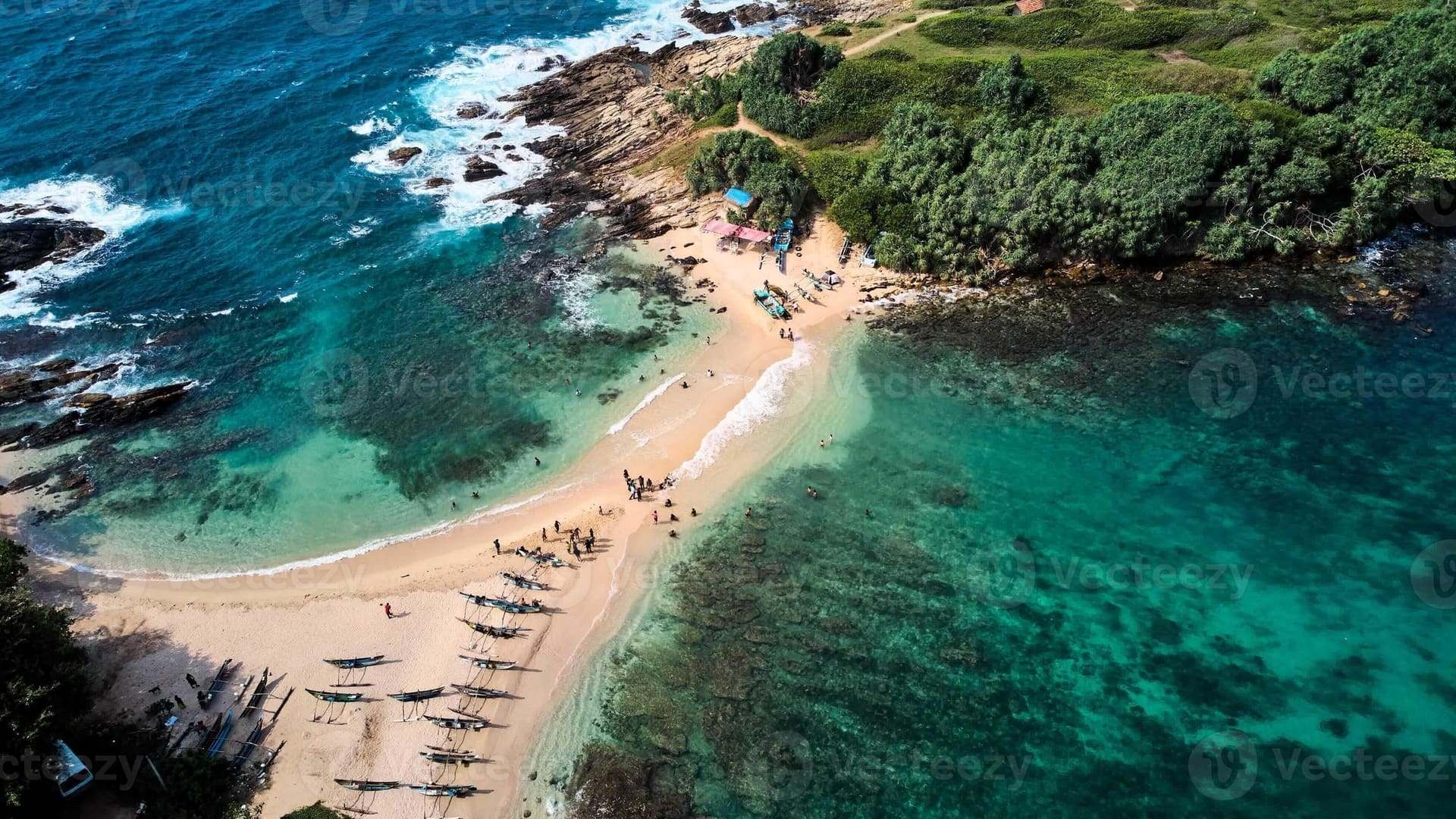
Kudawella / Nilwella “Blue Beach” island vibe: travellers pair Hummanaya with a sandbar walk at low tide (see Blue Beach Island) for secluded coastal time compared with Mirissa crowds.
- 4
Sustainable tourism angle: buy from vendors fairly, pack out litter, and respect residents’ lanes.
Visiting details — access, fees & timing
Time high tide and monsoon swell when you can; still visit off-season if you enjoy coastal walks — manage expectations.
- 1
Walk: commonly 10–15 minutes from parking with steep or rocky sections — distances vary (roughly a few hundred metres total).
- 2
Fees: early 2026 reports often cite ~500 LKR (foreign) and ~50 LKR (local) — verify printed prices; carry cash.
- 3
Best windows: southwest monsoon (often June–August) often energises the sea; many visitors add high tide and rougher morning seas for bigger drama — check Kudawella tide tables.
- 4
Day trips: Dikwella and Tangalle are natural hubs — bundle with Hiriketiya or Dickwella beaches the same day.
Honest expectations — calm days, parking & footwear
Helpful guides rank because they answer complaints: set expectations, then over-deliver on safety tips.
- 1
Weather truth: calm, glassy seas may mean a weak or absent jet — that is not “broken,” it is ocean physics.
- 2
Footwear: jagged, dusty, sometimes slippery stone — prefer sturdy trainers or hiking sandals; flip-flops are risky.
- 3
Parking: informal attendants may collect small fees — agree LKR, keep valuables with you, lock the vehicle.
- 4
Crowds & patience: spouts can be minutes apart — wait 10–20 minutes before judging the day.
Traveller tips
Treat this like a short hike with ocean spray — not a swim beach at the blowhole itself.
- 1
Sun & shade: limited shade on the platform — early morning or late afternoon avoids brutal heat.
- 2
Safety: stay behind rails; supervise children; watch for slick steps after spray or rain.
- 3
Cash culture: tickets, snacks, and parking are almost always cash-only.
Location
Hummanaya Blowhole, Kudawella, Sri Lanka
Open in Google Maps →Location & distance
- Exact location
- Hummanaya Blowhole, Kudawella, Sri Lanka
- Distance
- ~6 km
- Travel time
- 15 minutes
Things to do at a glance
- ✓🏆 Witness the “second-largest blowhole” spectacle — when the swell is right
- ✓📷 Photography & reels — 25–30 m spray, mist, and cliff colour
- ✓🍢 Village street food — fried fish, prawns & snacks on the walk
- ✓📚 Marine-life information centre — quick interpretive stop
- ✓🚗 Stack Dikwella, Tangalle & Nilwella Blue Beach Island on one slow-coast day
Best time to visit
SW monsoon (often Jun–Aug) · High tide · Rougher morning seas — confirm daily
- Southwest monsoon months typically add more wave energy — often the best chance for tall jets; carry a rain layer.
- Mornings can be rougher on the sea — sometimes better for drama; afternoons may be gentler on people but flatter on waves — always read the live marine forecast.
Practical tips
- Carry cash in small notes for tickets, parking, and vendors — ATMs are not at the trailhead.
- Offline maps: double-check pins; some lanes near Kudawella confuse first-time drivers.
- Multi-stop days: agree tuk or driver pricing in advance for Hiriketiya ↔ Hummanaya ↔ Tangalle loops.
Nearby places
How to get there
Tuk tuk
- From Hiriketiya or Dickwella: 15–25 minutes to Kudawella / Hummanaya parking — agree LKR before you go.
- From Tangalle (~12 km): ~20 minutes west along the coast — say “Hummanaya Blow Hole” or show maps offline.
Scooter
- Rent in Hiriketiya or Dickwella — lock helmets; park only where locals indicate to avoid blocking village lanes.
Car
- Coastal A2 corridor through Matara district — navigate to Kudawella, then follow signs or pinned maps to the blowhole parking.
Walking
- From parking to the viewpoint is a footpath segment — not suitable for strollers on steep parts; allow extra time.
Safety
- Stand back from spray zones if the wind blows salt onto the platform — decks can be slippery.
- Do not climb fences or lean for selfies — sudden jets can surprise you.
- After heavy rain, paths may be muddy — choose footwear accordingly.
Photo gallery
Tap any photo to view it larger.
Book & verify
Official links & reviews
Cross-check tickets, reviews, maps, and independent write-ups before you go — especially for seasonal swell and opening hours.
- Reviews
Tripadvisor — Hummanaya Blow Hole (Kudawella)
Recent reviews, photos, and traveller tips for timing, tickets, and the walk from parking.
Open in new tab
- Official website
Reveal The Collection — Hummanaya Blow Hole experience
Curated experience page — village walk, viewpoints, and context for the Dikwella / Kudawella area.
Open in new tab
- Reference
Wikipedia — Hummanaya
Encyclopedia summary: only known blowhole in Sri Lanka, often cited as the second-largest of its kind in the world; coordinates and geography.
Open in new tab
- Reference
Research paper (PDF) — Faculty of Humanities & Social Sciences, University of Ruhuna
Academic reference on the site and coastal context (opens as PDF).
Open in new tab
- Travel guide
Kate & Mike’s Travels — Hummanaya Blow Hole, Kudawella
Independent visit write-up: parking, tickets (~500 LKR when they visited), tide tips, and the village walk.
Open in new tab
FAQs — common searches & “people also ask”
When is the best time to see the Hummanaya blowhole?
The most dramatic displays usually need wave energy — often during the southwest monsoon (commonly June–August) plus higher tide windows. Many travellers also find rougher morning seas help. Calm, flat days can produce little or no visible jet — always check tide charts and surf height the same morning.
Is there an entrance fee for Hummanaya?
Yes — ticketed access. As of early 2026, many travellers report roughly 500 LKR for foreign visitors and about 50 LKR for locals, but prices are set at the gate and can change — read the printed board and carry cash.
How long is the walk to the blowhole?
Typically about 10–15 minutes from parking, including steep or rocky sections — total distance varies widely (roughly a few hundred metres) depending on where you park. Stairs and uneven stone can feel harder in heat — plan water and rest.
Can you swim at Kudawella at the blowhole?
The blowhole zone is for viewing behind barriers — not a swimming spot. For swimming or beginner-friendly surf, head to nearby Kudawella bay beaches and coves, or plan Nilwella’s Blue Beach Island sandbar (see our Blue Beach Island guide) — conditions vary by season.
Is Hummanaya really the second-largest blowhole in the world?
Marketing and guidebooks often repeat that claim; academic and encyclopedia sources describe it as one of the most notable blowholes by spray height when the sea cooperates. The important part for visitors: swell and tide matter more than superlatives.
Is Hummanaya the only blowhole in Sri Lanka?
Yes — it is the only known natural blowhole in Sri Lanka in mainstream references.
How high can the water jet go?
Under strong swell, plumes are often quoted around 25–30 m (roughly 80–100 ft). Calm periods may produce little or no visible jet.
What does “Hummanaya” mean?
The name is tied to the audible “hoo” or whistling sound carried on the wind when the blowhole fires.
How far is Hummanaya from Tangalle or Dikwella?
About 12 km from Tangalle and about 5 km from Dikwella by road — exact times depend on traffic and which lane you take through Kudawella.
What should I wear on my feet?
Sturdy shoes or hiking sandals beat thin flip-flops — the path is jagged, dusty, and can be slippery after rain or spray.
Explore other places
More spots near Hiriketiya worth adding to your itinerary.
On YouTube
Curated vlogs and tips play directly on this page. Prefer the YouTube app? Use “Watch on YouTube” in each player’s menu.